Friday, April 29, 2011

Foodborne Pathogens of Public Health Significance

I came across this cool WSJ healthblog as I was skimming my GoogleReader.

Source: WSJ
It is well known that foodborne illnesses can cause significant morbidity and mortality. A new report from the University of Florida's Emerging Pathogens Institute, summarized and linked from the WSJ article, details the 10 deadliest pathogen-food combinations.

  1. Campylobacter in poultry: $1.3 billion annually, 9,500 lost quality adjusted life years (QALYs)
  2. Toxoplasma in pork: $1.2 billion, 4,500 QALYs
  3. Listeria in deli meats: $1.1 billion, 4,000 QALYs
  4. Salmonella in poultry: $700 million, 3,600 QALYs
  5. Listeria in dairy products: $700 million, 2,600 QALYs
  6. Salmonella in complex foods: $600 million, 3,200 QALYs
  7. Norovirus in complex foods: $900 million, 2,300 QALYs
  8. Salmonella in produce: $500 million, 2,800 QALYs
  9. Toxoplasma in beef: $700 million, 2,500 QALYs
  10. Salmonella in eggs: $400 million, 1,900 QALYs
Carnivores are not exclusively at risk, even vegetarians can get Salmonella from produce.

BON APPÉTIT

Thursday, April 28, 2011

Hand Hygiene in the Modern Era

Safe Care: It is still all about clean hands
For a cool perspective on hand hygiene and novel technologies to improve compliance, check out this blog post by Dr. Michael Edmond and associated New York Times commentary.

That is all for today.

Wednesday, April 27, 2011

Inappropriate Vascular Devices- Not Without Harm

What impact does inappropriate catheter use have on the risk of adverse events and bloodstream infections? A recent paper in Journal of Hospital Infection aims to answer that question. 


Using a prospective observational study design, the investigators developed definitions for appropriate intravascular device use, estimated the frequency of inappropriate use of intravascular devices, and examined risk factors and outcomes associated with inappropriate intravascular catheter use. Among 436 patients studied, the use of 876 intravascular devices (both peripgeral and central) was observed. Thirty one percent of all catheter days were found to be inappropriate. 


Using logistic regression analysis,  inappropriate usage was strongly associated with increased intensive care unit admission (OR 5.98 P < 0.05) and length of hospital stay (4.9 ± 4.3 days for appropriate vs 8.5 ± 12.6 days for inappropriate; P < 0.05). 

Inappropriate device use was not significantly associated with collection of blood and catheter tip culture, presumably a surrogate marker for a bloodstream infection. Larger studies are needed to assess the impact, if any, of inappropriate intravascular device use and risk of bloodstream infection.
 
Perhaps our coveted central line checklists should have an initial 1st step: certify the need and appropriateness of intravascular catheterization prior to insertion.

Tuesday, April 26, 2011

Internal Medicine vs. Primary Care

I have blogged before on matters of medical education. As I am both an internist and an infectious diseases specialist, as well as a medical educator, I found this WSJ Blog and original Archives of Internal Medicine publication relevant.


Source: WSJ
In brief, we have a projected physician shortage. We need more primary care doctors to manage the health and prevention needs of an aging population. Many primary care doctors are internists but not all internists are primary care doctors (as many choose hospital based practices or subspecialties). Many medicals students have positive perceptions of internal medicine but not primary care.


With growing medical education debt, long hours, high stress and lower reimbursements (than that of procedure based specialists, dermatologists etc), it is difficult to attract students to primary care.  The shortage of primary care physicians has no apparent end.


Other than coercion, which, I do not favor, meaningful incentives must be made available to lure medical graduates into primary care.  Otherwise, who will take care of me when I am old?

Monday, April 25, 2011

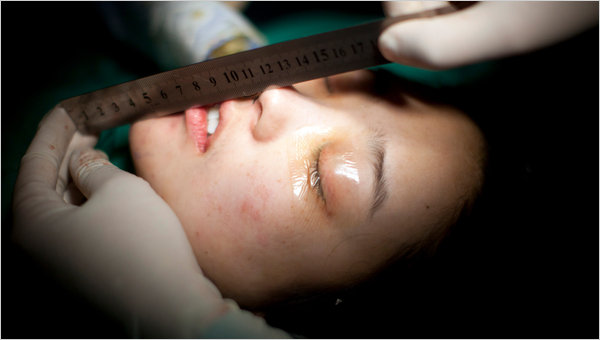
Cosmetic Surgery, The Chinese Way

I am off the topic of infectious diseases and treading out of my comfort zone.

Source: NY Times
Back in 1997, in the last semester of medical school, I spent 4 weeks in Beijing, China, as a visiting medical student at the Capital University of Medical Sciences. Part of the personal allure was the opportunity to experience medicine in the Eastern tradition. My hosts, however, were more interested in showing me their sophisticated medical services, ICUs, CT and MRI scanners. 

They were modernizing, quickly. The Beijing skyline was densely populated with tall buildings and ubiquitous, construction cranes, testaments to the breakneck growth of a country on the rise.

With a capitalist economy and wealth comes the growing need for newer, non-traditional medical services. Cosmetic surgery.

This recent NY Times article explores the growing demand for cosmetic surgery in China, a trend incentivized by high reimbursement,  little medical regulation and supported by a young, vain and wealthy clientele.  

Modernity is now in Chinese medicine. This is a massive departure from the barefoot doctors of China's recent past.

Friday, April 22, 2011

Patients as Consumers

I will be brief.


Source: fortunewatch.com
Medicine is not a simple commodity to be bought and sold on a market. Patients are not simply 'consumers' or 'clients'. 


People often go to the doctor during times of acute illness, emergency and discomfort, thus the notion of 'price shopping' for a physician, much like one would do for a television of automobile, is off the mark.


People appear to choose their physician in a variety a ways, with consumer activism being less influential than assumed and with many patients taking a passive role in healthcare utilization. An older study suggested that people choose their physicians largely on the advice of family and friends.


Much of the cost of medical care is borne by third party payers (insurance, Medicaid and Medicare), thus the individual responsibility for price consideration is diminished.


A recent New York Times opinion article nicely explores why patients are not simple consumers.


Have a nice weekend.

Thursday, April 21, 2011

At times, Less is More in Medicine

The Archives of Internal Medicine has a a recent and insightful editorial and series of reports on this topic.


I have been given a fair amount of thought recently on overtreatment and overdiagnosis in medicine. I am sure that I have been guilty, much like many of my colleagues, on this front. 


Often, diagnostic tests are ordered without questioning how the result will or should change patient treatment. Couple an inexperienced or uncertain doctor with an anxious patient and the potential for overtesting and overtreatment seems ripe.


Perhaps the most important point that we can learn from this editorial is that safer ways to reassure patients exist. The authors propose talking with patients as the first choice for reassurance. 


Diagnostic tests should be reserved for cases in which the benefits can be reasonably expected to outweigh the risks. The physician should understand the sensitivity, specificity of a test, along with the positive predictive value given the disease's prevalence in the community. These principles are still taught in medical school lecture halls. Somehow, they are forgotten during the course of clinical practice.


Perhaps we should begin to really drill home this message during internship as interns order more tests.